Corporate ESG Duty of Care: The Impactful Decision in the Mariana Case
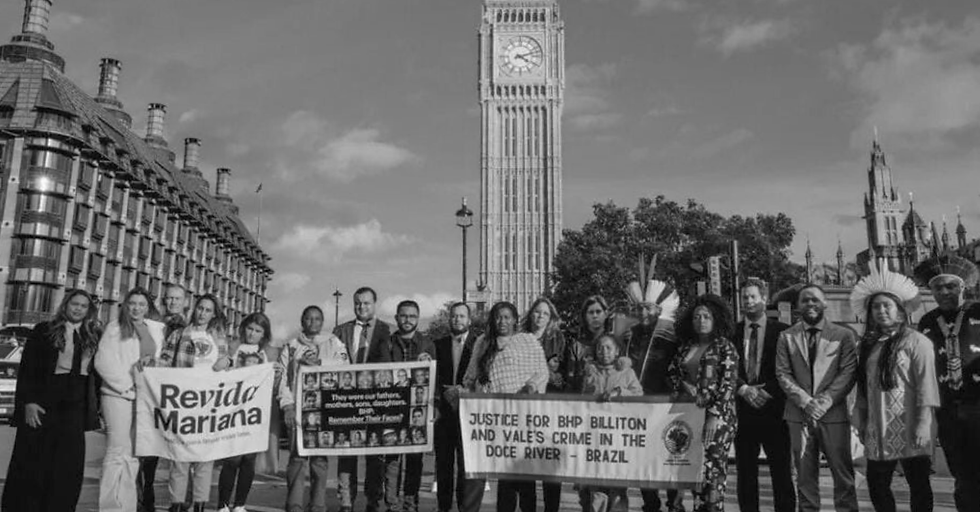
If in the previous edition of this newsletter we discussed the challenges of COP30 and Brazil's leadership in the climate agenda, today we must turn our attention to a recent legal milestone that will impact corporate socio-environmental responsibility on a global scale.
On November 14, 2025, the High Court of Justice in London delivered the long-awaited decision in the case of Municipality of Mariana v. BHP, confirming the context I anticipated in my interview with Deutsche Welle (DW) earlier this year: the proceedings moved toward holding the multinational accountable, consolidating a new era in the multi-factorial and specific interpretation of the duty of care, from the perspective of the environmental liability of parent companies in large-scale projects.
Below, I detail the crucial points of the decision and its implications for corporate governance (the "G" in ESG) and the materialization of the legal effect of due diligence and duty of care regarding the risks and impacts of corporate activities and ventures.
1. Why did the British Judiciary judge a Brazilian disaster?
The first and most significant hurdle discussed in the proceedings was jurisdiction. BHP argued that Brazil would be the forum non conveniens. The decision to accept English jurisdiction was, therefore, a crucial step toward the condemning verdict:
Forum of Necessity: The British Court rejected BHP’s argument, concluding, in light of British procedural rules, that existing redress mechanisms in Brazil did not offer a realistic and effective path for victims to seek full reparation.
Place of Judgment, Brazilian Law: Once jurisdiction was established in the UK, the case was framed to be judged by fully applying Brazilian Substantive Law (Law 6.938/81, Civil Code, Corporations Act), binding BHP to strict legal standards even in a foreign court.
Thus, the British justice concluded there was jurisdictional power to sue the parent companies of the entity that caused the damage—Samarco Mineração S.A.—on English soil, given the applicability of the Recast Brussels Regulation to BHP Group PLC (lawsuit in the defendant's domicile - London), as well as English law principles regarding service of proceedings (substantial risks regarding the jurisdiction of facts). This logic has already been applied in similar cases of socio-environmental damage by multinationals, such as Vedanta Resources v. Lungowe and Okpabi & ors v. Royal Dutch Shell.
2. Standing to Sue (Locus Standi): The Municipality as a Federated Entity in a Foreign Forum
Another major point of discussion in the British court's decision regarding the class action on the Mariana disaster was the standing of the plaintiffs. In the decision, Justice O’Farrell confirmed the active legitimacy (standing) of Brazilian municipalities, such as Mariana, to sue BHP abroad based on Brazilian constitutional law:
Federal Autonomy and Actus Gestionis: The ruling accepted the argument that municipalities are autonomous entities of the Brazilian Federation (Art. 1 and 18, CF/88) and, therefore, endowed with the fundamental right of access to justice (Art. 5, XXXV). Their actions for damages abroad are classified as acts of management (actus gestionis), rather than acts of sovereignty.
Implications: This distinction was crucial, as it demonstrated that jurisdictional immunity does not apply, nor does the need for federal authorization. Standing was granted based on the pursuit of compensation for direct damages (public assets, tax revenue) and the duty to protect the local environment against damages caused by a private agent.
Despite this British ruling, it is essential to follow the next steps of the judgment in the Brazilian Supreme Court (STF) regarding ADPF 1178/DF, which addresses the prohibition of Brazilian municipalities filing lawsuits abroad for damages caused in Brazil, arguing that this violates national sovereignty and the federative pact.
3. The Verdict: Foreseeability and Negligence Regarding Socio-Environmental Risk
Justice O’Farrell’s decision did not only condemn BHP but deconstructed the argument that the Fundão dam failure was an unforeseeable accident. The ruling was blunt in establishing that the collapse resulted from structural failures that were known and ignored, despite being assessed, warned about, and discussed within governance and risk structures:
Technical Cause: The decision confirmed the immediate cause was tailings liquefaction, triggered by the lateral extrusion of mud beneath the structure. This occurred due to inadequate drainage and dam saturation.
The Knowledge Factor: It was proven in the records that by August 2014, BHP knew or should have known that drainage was insufficient, that the setback increased the load on fragile areas, and that there were no reliable stability studies for the mining complex in Mariana-MG.
Failure in the Duty to Act: The British court concluded that BHP, as a parent company alongside Vale in 2015, was negligent and reckless. Even faced with clear signs of instability (cracks, saturation), the company allowed operations to continue, failing to mitigate risks that were both foreseeable and avoidable.
4. Environmental Liability: The Indirect Polluter
A highly relevant point for Brazilian environmental law—applied by the English court—was the interpretation of the concept of "polluter." This is a long-standing discussion in Brazil that still generates debate due to its difficult definition in concrete cases.
BHP's defense argued that since it was not the direct operator (Samarco’s role at the time), it could not be held liable for the 2015 tragedy. The court rejected this view, applying the National Environmental Policy Law (Law 6.938/81). The judge concluded that Brazilian law does not require a prior specific legal security duty to classify an indirect polluter. Instead, the classification is multi-factorial:
Indirect Polluter (Multi-factorial Criteria): The ruling reaffirmed that Brazilian law defines a polluter as anyone who, directly or indirectly, is responsible for the activity causing degradation, considering that: i) BHP (jointly with Vale) held effective control over Samarco via the Shareholders’ Agreement (SSA) and Bylaws; ii) BHP was actively involved in Samarco’s activities at all levels (from strategic to operational); iii) BHP assumed responsibility for risk management and audits; iv) BHP invested substantially in the activity; and v) BHP obtained financial benefits from Samarco’s operations.
Strict Liability: Liability for environmental damage is strict (regardless of fault) and based on the risk-of-the-enterprise theory (teoria do risco integral). A factual causal link was established between the activity for which BHP was held responsible and the environmental damage.
Joint and Several Liability: The decision reinforced that direct and indirect polluters are jointly and severally liable, allowing victims to seek full reparation from any of the involved parties.
5. Abuse of Control (Corporations Act) and the Duty of Care
Justice O’Farrell concluded that, even if strict liability were not applicable, BHP would be liable based on fault (negligence). She analyzed the company’s role as a controller under the Brazilian Corporations Act (Law 6.404/1976) and the civil duty to prevent and repair damage to third parties (Art. 186, Civil Code).
For the British court, the general civil duty of care must apply directly to BHP as a parent company, even if the damage occurred in its subsidiary's operation. This is paradigmatic in both corporate and environmental law.
Link to the Corporations Act: Although "abuse of control" was not the primary basis for the conviction, the judge used BHP’s controlling power (Art. 116) and its social function duty (Art. 116, sole paragraph) to reinforce that the omission to act with the knowledge it possessed constituted fault (negligence).
6. Governance and the Role of the Parent Company (Shareholder Omission?)
For the corporate market and ESG professionals, this decision materializes a clear warning regarding the legal "shielding" of Joint Ventures. The argument that Samarco was an independent entity crumbled in the face of evidence of effective control.
The "Corporate Veil": The decision clarifies that holding shares is not just a right to dividends; it attracts liability when there is involvement in risk management.
Regulatory Pressure: Even though Art. 117 of Law 6.404/76 (abuse of power) was not directly triggered, the interpretation strengthens the legal horizon regarding the need for greater attention to corporate controls in ESG matters.
Conclusion and Expectations
As I previously told DW, this trial is not just about the past of Brazil's greatest socio-environmental tragedy, but about the future of corporate obligations regarding structural risks. The conviction of BHP in England validates the thesis that national borders are not barriers to socio-environmental justice.
For companies, the message is unequivocal: ESG risk management cannot be delegated or treated as a mere formality. The duty of care requires proactive action. Corporate control is no longer a passive legal shield; it is an active responsibility that attracts fault and demands action in the face of critical environmental risks.
The Mariana decision is now a global precedent. The cost of inaction—financially, legally, and reputationally—has never been higher.
Next Steps: With liability established, the British proceedings now move to Phase 2, dedicated to defining the compensation amounts, with claims exceeding R$ 240 billion. It is important to note that BHP still has the right to appeal this decision.
--
[Automatically translated]
Originally published on LinkedIn
Author: Bruno Teixeira Peixoto


Comments